-
Shop
- Advanced Technologies
- AI Career Advantage Collection
- AI Skills
- AI Skills for Creators & Freelancers
- AI Client Management
- AI Ethics
- AI Mindset
- AI Tools & Prompts
- AI Writing & Content Creation
- Audio, Voice & Music
- Design & Visual Creation
- Email, Messaging & Communication
- Freelancing & Business
- Marketing, Ads & Conversion
- Productivity, Workflow & Automation
- SEO & Search Optimization
- Social Media Content & Growth
- Strategy, Planning & Analytics
- Video Creation & Editing
- Bathroom
- Beauty
- Car Accessories
- Car Buying & Ownership
- Confidence
- Dating & Social Skills
- Digital Resources
- Education & Learning
- Family & Parenting
- Fashion
- Furniture
- Halloween
- Health & Wellness
- Home Electronics
- Home Styling & Organization
- Kids & Babies
- Kitchen
- Lighting
- Luxury Brands Collection
- Parenting & Child Development
- Patio, Lawn & Garden
- Personal Growth
- Personal Style & Fashion
- Pet Care
- Pet Lifestyle & Wellness
- Pet Supplies
- Smart Amazon Shopping
- Smart Home Living Guides
- Stress Relief & Relaxation
- Thanksgiving
- Travel
- Travel & Adventure
- Wealth
- Wellness
Gratitude Journaling: A Gentle Guide to Calm and Clarity
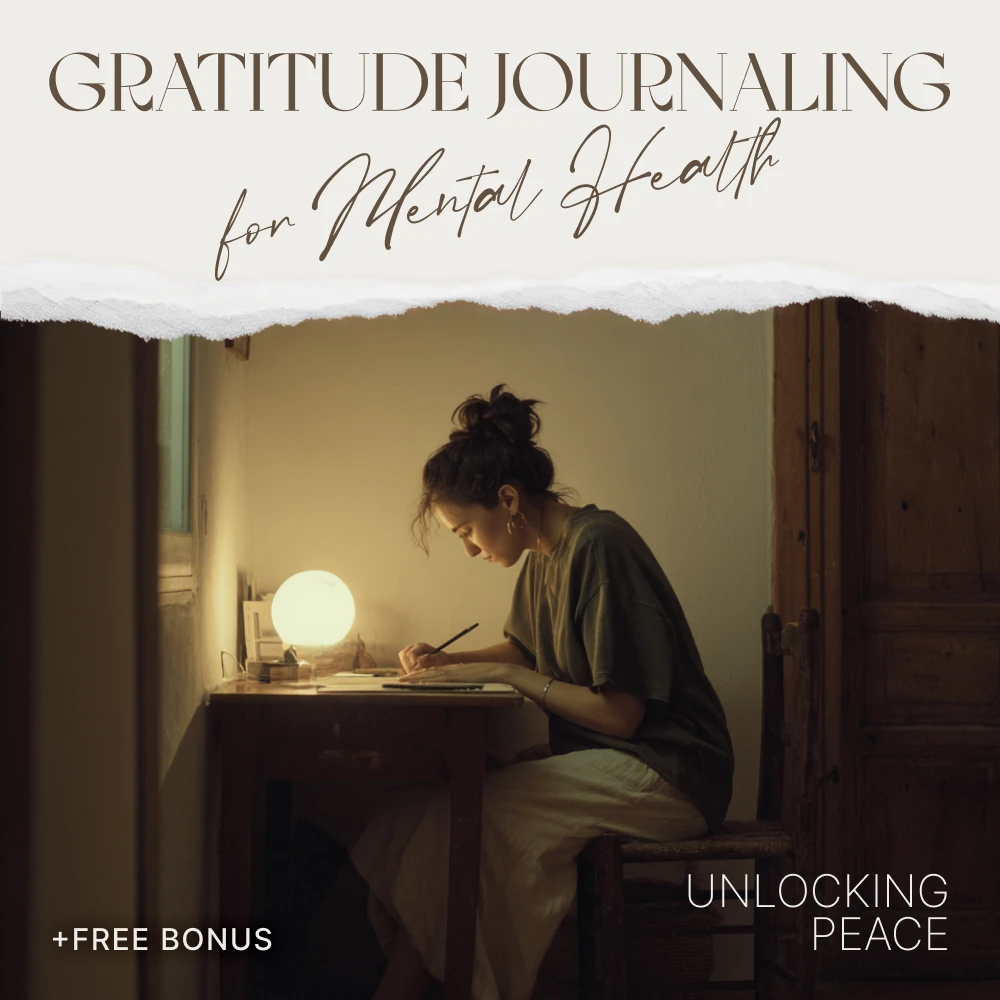
Gratitude Journaling: A Gentle Guide to Calm and Clarity

Make Space for a Calmer Moment
Gratitude journaling gives you an opportunity to slow down and pay attention to the small things that support you. A comfortable chair, a helpful coworker, or a few quiet minutes can be worth noticing, even when the rest of your day feels complicated.
There is room on the page for disappointment, frustration, and uncertainty, too. You can acknowledge that something was hard and still name one thing that helped you through it. Neither observation cancels the other.
We see journaling as a self-care practice, not a treatment or a guaranteed way to improve mental health. For more on gratitude and well-being, Harvard Health Publishing discusses the practice of giving thanks.
Check the product’s listed specifications when evaluating make space for a calmer moment.
A Simple Way to Begin
Our Unlocking Peace Through Gratitude Journaling is a guided digital journal centered on gratitude and mindfulness. It may suit you if you prefer a starting point to an entirely open-ended page.
Choose a quiet moment and set aside a few minutes. Read a question, consider what comes to mind, and respond honestly. A few words can be enough.
If gratitude feels difficult to find, start with something neutral: what made today a little more manageable? You can keep your answer short, return to it later, or choose a different question.
Check the product’s listed specifications when evaluating a simple way to begin.
Featured in this guide
Unlocking Peace Through Gratitude Journaling – Guided Digital Journal for Calm & Clarity | Mindfulness Guide with Gratitude Journal Prompts for Mental Health
Prompts for Everyday Reflection
A comforting routine, a person who helped, or a strength you used can all be starting points. The following are ideas from our team, not a list of questions included in the journal:
- Comfort: What helped me feel more at ease today?
- Connection: Who made my day a little easier?
- Personal strength: What did I handle with care?
Try naming one specific detail and why it mattered. A warm drink, for example, may have given you a quiet pause. If nothing more comes to mind, one sentence is enough.
Create a Five-Minute Ritual
Settle somewhere comfortable, choose one approachable question, and write for a few minutes. You might describe what happened, name a detail you appreciated, and note why it mattered.
Before you finish, notice how you feel without expecting an immediate change. Write in the morning or evening, whichever suits you. If you miss a day or several, you can return without catching up.
Choose a Practice That Fits Your Life
A journal is useful when it feels approachable enough for you to return to comfortably. Some people enjoy open-ended pages; others prefer a little guidance. Think about when you like to reflect and how much structure helps you begin.
Our gratitude-focused digital journal is one option if you’d welcome a starting point. If creating a simpler home routine also appeals to you, our Less Mess, More Zen cleaning toolkit guide offers a separate way to explore a more streamlined approach to cleaning.
Persistent distress deserves support from a qualified mental health professional. The National Institute of Mental Health offers guidance on caring for your mental health and when to seek help.
A Gentle Next Step
If you’re ready to try, explore Unlocking Peace Through Gratitude Journaling and begin with one honest reflection. Choose a moment that works for you, write about something small, and let the entry be imperfect. Our team hopes you find a rhythm that feels comfortable to return to, one page at a time.
Check the product’s listed specifications when evaluating a gentle next step.
FAQ
What is the 3/2-1 method of journaling?
The 3/2-1 method generally uses three categories of reflections with three, two, and one response respectively. The categories vary by version, so you can choose ones that suit your needs.
What is the best guided journal for mental health?
There is no single best guided journal for everyone. A journal can support reflection, but it is not a substitute for mental health care.
What is the 5 minute gratitude journal?
It generally refers to a short practice of noting things you appreciate and reflecting briefly on them. Routines and questions vary, and our journal does not claim to follow a specific branded method.
See if Unlocking Peace Through Gratitude Journaling – Guided Digital Journal for Calm & Clarity | Mindfulness Guide with Gratitude Journal Prompts for Mental Health fits your setup
Was this article helpful?
Yes
No




Leave a comment